Koia Protein Shake Review: A Dietitian's Honest Take on Taste, Nutrition, and Value for Money
By: Sarah Glinski, RD
As a dietitian, I'm asked daily how to get more protein. While people who like animal-based products typically have no trouble getting the protein they need, those who prefer a plant-based diet may struggle to meet their protein targets if they don't plan their day carefully.
Unfortunately, many of the ready-to-drink plant-based protein shakes I've tried have been…not good. You know what I mean. Chalky, too thick, and with an unmistakable earthy flavor. That was until I discovered Koia. These dairy-free, plant-based, ready-to-drink protein shakes come in several varieties and are among the few RTD plant-based protein shakes I've actually enjoyed (and I cannot tell you how sad I am that they don't ship to Canada yet!).
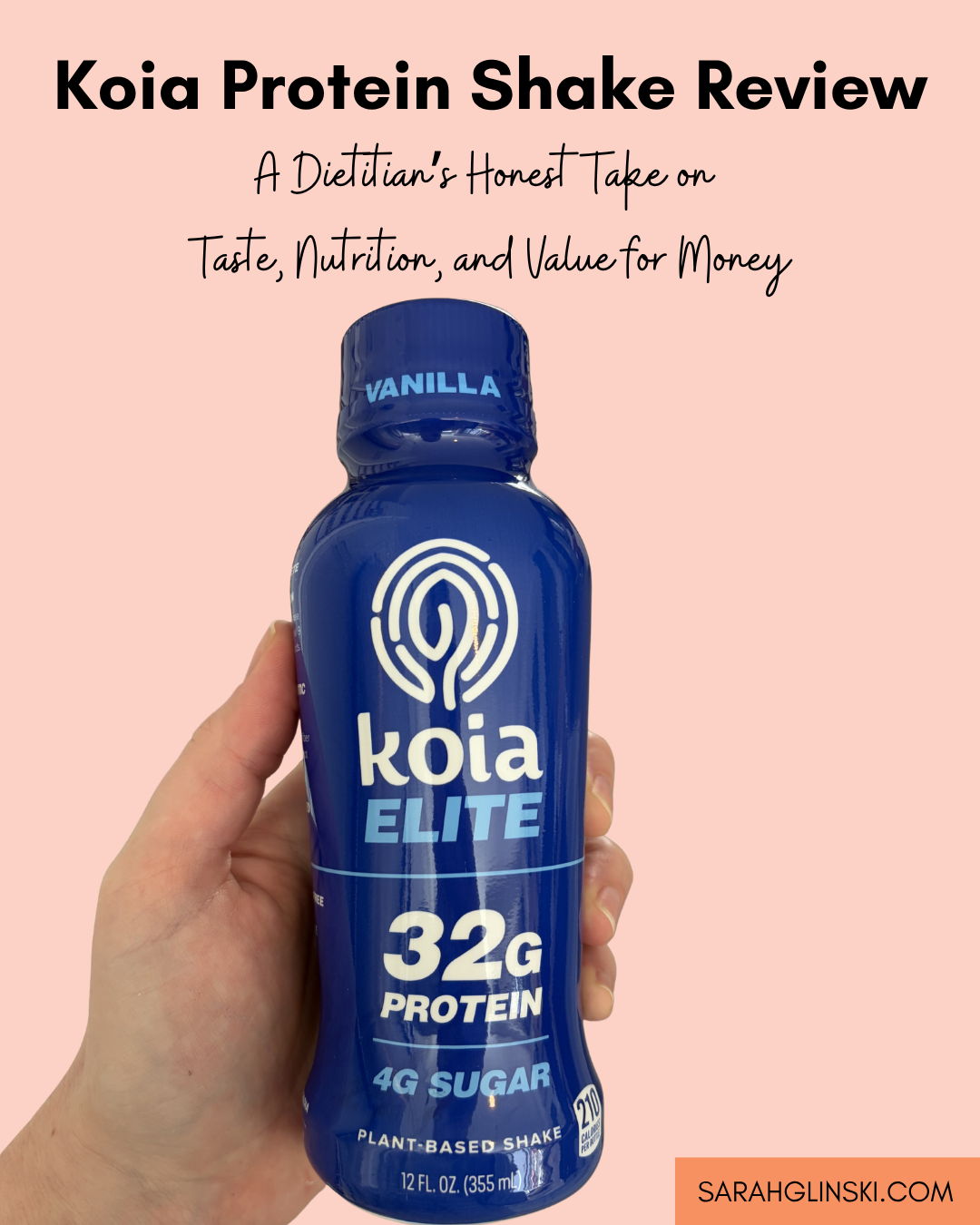
If you've been scouring the internet for a complete Koia protein shake review covering taste, nutrition, and value for money, I've got you covered. I'll be focusing on their Elite shakes, which are their highest protein shakes. If you want to learn more about their nutrition shakes, check out this article I wrote for Yahoo! Health.
And if you do decide to try it, click here or use the code SGLINSKIRD at checkout for 20% off your order!
This post may include affiliate links, meaning I could earn a small commission if you click and make a purchase—at no extra cost to you!
Koia Elite Protein Shake Nutrition and Ingredients
First things first: the Koia Elite Protein Shake is just that—a protein shake. If you're looking for an all-in-one shake that can be used as a meal replacement, I recommend their Nutrition Shakes. While they contain less protein (20 grams per 11-ounce bottle), they also contain 21 added vitamins and minerals.
However, for a meal replacement shake, they're quite low in carbohydrates (13 grams, 6 of which are fiber), so I'd recommend pairing them with a source of carbohydrates, such as whole grains, fruit, or starchy vegetables, to ensure you're getting the energy you need, especially if you're very active.
Protein
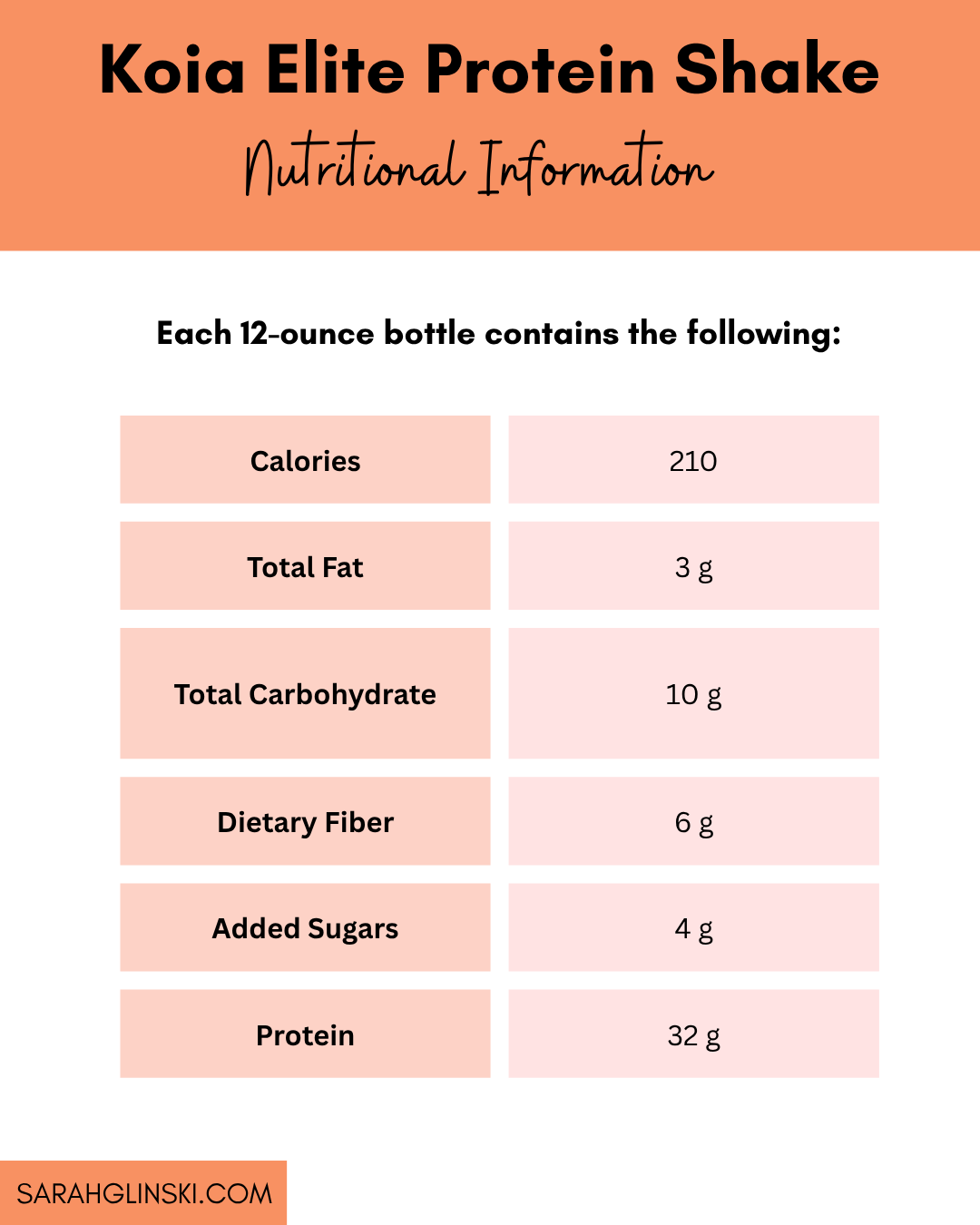
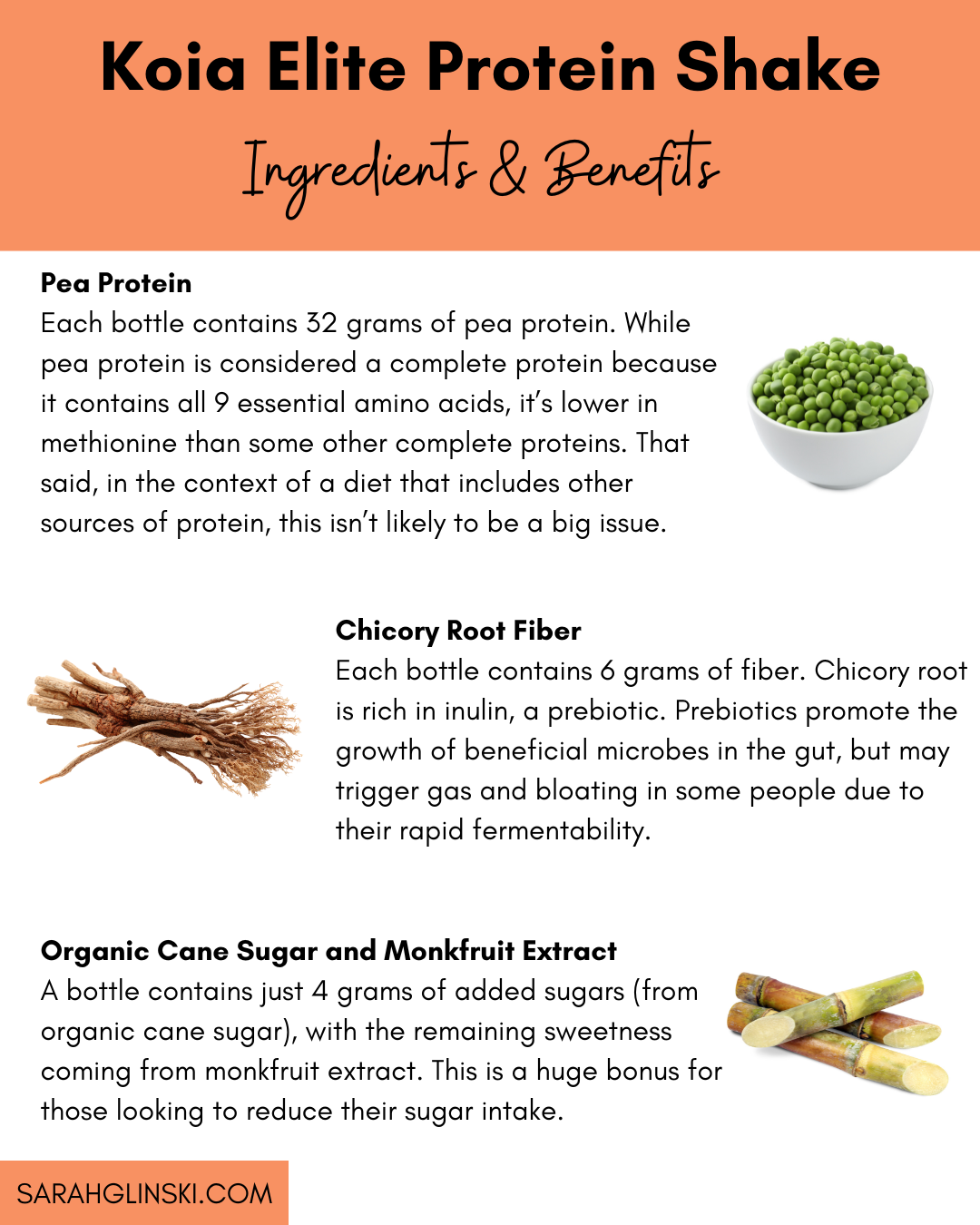
But back to the Elite Protein Shake! Each 12-ounce serving contains 32 grams of protein from pea protein. This is a solid dose of protein for anyone looking to supplement their intake. While they are slightly higher in calories than their dairy-based counterparts (210 calories versus 150-170 calories in most dairy-based protein shakes with 30 grams of protein), in the overall context of an entire day of eating, this isn't a huge concern (and could even be beneficial for people struggling to meet both their protein and calorie requirements, such as people going through cancer treatment or people taking GLP-1 medications like Ozempic).
However, one thing to keep in mind about pea protein is that while it's technically a complete protein (meaning it contains all 9 essential amino acids that our body can't produce on its own), it's lower in methionine than other complete proteins, such as whey protein. However, if you're eating a varied diet with protein from a variety of different sources (animal or plant), this isn't likely to be much of a problem. Plus, pea protein is rich in branched-chain amino acids (BCAAs), which play an important role in muscle building.
Fiber
Something I LOVE about all Koia protein shakes is their fiber content. Most people don't get anywhere near enough fiber, and as a gut health dietitian, that makes me very sad. Each bottle contains 6 grams of fiber thanks to the addition of chicory root. And bonus—chicory root fiber is rich in inulin, a prebiotic. Prebiotics promote the growth of beneficial microbes in your gut, and since research shows that a healthy gut microbiome contributes to everything from immune regulation to metabolism and nutrient availability, doing what we can to keep our gut microbes happy is key to staying healthy.
However, for my IBS friends, you may want to try a small portion of this protein shake to see how your body reacts. Since inulin is rich in fructans, a type of FODMAP, it can trigger symptoms like gas and bloating in sensitive individuals. In my experience, inulin is a very common trigger for people with IBS, so if that's the case for you, you may want to consider a different product.
Sweeteners and Sugar Content
People looking to avoid artificial sweeteners like aspartame and sucralose will love that Koia products don't contain these ingredients. Their Elite Protein Shakes contain just 4 grams of added sugars, and are sweetened with a combination of organic cane sugar and monk fruit extract (a popular natural, calorie-free sweetener that lacks the bitter aftertaste of stevia). For anyone looking to reduce their sugar intake, Koia Elite Protein Shakes are a great choice.
Koia Elite Protein Shake Taste Review
Compared to most of the other plant-based protein shakes I've tried, Koia is less chalky, not as thick (but in a good way), and most importantly, doesn't have that distinct earthy flavor that many plant-based protein products have. In fact, it was hard to tell that it wasn't a dairy-based protein shake.
Another thing I like about Koia Elite Protein Shakes is that they're not overly sweet. I find that many ready-to-drink protein shakes that use artificial sweeteners like sucralose are sickly sweet and leave an unpleasant aftertaste. Since Koia uses a combination of organic cane sugar and monkfruit extract, I find it lacks the artificial flavor that many other RTD protein shakes have.
Pros and Cons of Koia Protein Shakes
If you're skimming this blog post, here's a quick rundown of the pros and cons of Koia protein shakes:
Pros:
Dairy-free
Vegan
Not chalky
No earthy aftertaste
Convenient ready-to-drink format
Lower sugar than many other shakes
6 grams of prebiotic fiber per bottle
Cons:
Pricey
Not low FODMAP
Added fiber may trigger digestive issues in sensitive individuals
Final Verdict: Is Koia Protein Worth It?
Overall, I love Koia protein shakes for anyone looking for a tasty, convenient way to boost their protein intake. They're a great option for people who can't tolerate dairy, busy professionals, as a light snack, or for a post-workout protein boost.
That said, people with IBS may struggle with the fermentable fiber in Koia shakes, while budget shoppers may prefer a less expensive protein shake (at over $4 a bottle, they’re not cheap). And since they only ship within the United States, my fellow Canadians will have to look for other options.
While I always recommend getting your protein from whole foods first, Koia protein shakes are my go-to choice when I want a plant-based protein shake that actually tastes good. Click here to try it yourself or use the code SGLINSKIRD at checkout for 20% off your order!
Frequently Asked Questions
-
When included as part of a balanced diet rich in fruits, vegetables, whole grains, legumes, nuts, seeds, and lean proteins, Koia can be a healthy daily addition for people looking to boost their protein intake.
-
Because of its added prebiotic fiber from chicory root, Koia may cause bloating if you're not used to eating a lot of fiber. To decrease the risk of bloating, start by drinking half a bottle to see how your body reacts. And if you have IBS and are sensitive to FODMAPs (specifically, fructans), you may want to give these protein shakes a miss.
-
Not all Koia products are meal replacements. Their Nutrition Shakes (available in Vanilla Bean, Cacao Bean, Chocolate Banana, and Cold Brew Coffee) contain added vitamins and minerals and may be used to replace a meal, such as breakfast. However, they're low in carbohydrates, so you may want to add a source of complex carbohydrates, such as a piece of fruit or whole-grain toast.